
Nov 28, 2026
Baby Diaper Pants: Features Brands Should Consider Before Manufacturing
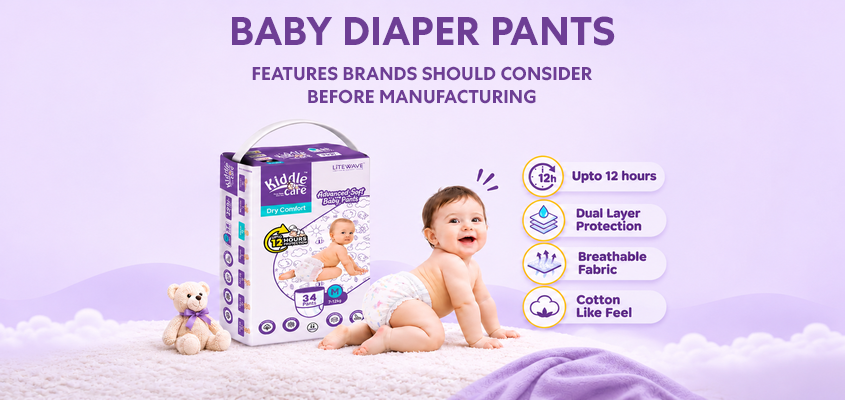
What Makes a Baby Diaper Pant Comfortable, Reliable & Parent-Friendly?
Ask a few young parents what they want from a diaper, and you'll hear the same short list. Quick to pull on, even when the baby won't keep still. No leaks at night. No red marks on the skin. That's a big reason baby diaper pants have become so popular in India and elsewhere. You pull them up like underwear, and there are no tapes to fight with. For a brand, though, pants are less forgiving than they look. Parents notice every small thing: how the waistband feels, whether the legs leak, whether the pack in month three matches the pack in month one. So product quality and design matter from the very first sample. The materials, the absorbency, the fit, and the manufacturing partner all need to be right, and careful planning before you place an order is how you meet what parents expect instead of finding out through bad reviews.1. Soft and Skin-Friendly Materials
Start with the material. It touches the baby for hours, and baby skin is thin and gets irritated easily. The inner layer should feel soft, and it should pull liquid through fast so the skin doesn't stay wet. Airflow matters too. A diaper that traps heat is awful in a hot Indian summer. The outer layer has to stretch when the baby moves, not crinkle and bunch. Be a little sceptical of whatever a supplier tells you. Ask for the material details in writing, plus any skin testing they've done. "Gentle" printed on a brochure proves nothing.2. High Absorbency and Moisture Locking
Parents don't say "absorbency". They say "it leaked" or "it didn't". The core does most of the work. Usually that's fluff pulp mixed with super-absorbent polymer, and the mix changes how quickly liquid goes in and how well it stays there. So ask three things: how fast does it absorb, how much can it hold, and does the top still feel dry afterwards? That last one matters. A wet top layer is often what wakes a baby up. Think about when it will be worn, too. For daytime, a slimmer diaper is fine. At night you need a bigger core that spreads the liquid out instead of letting it sit in one place. Some brands sell a normal pack and a night pack for that reason.3. Leak Protection and Secure Fit
Most leaks don't happen in the middle of the diaper. They happen at the legs and the waist, usually when the baby is moving. Start with the leg openings. Leak guards, the little raised barriers, and elastic leg cuffs keep liquid in when a baby crawls, kicks or sits. Then the waist. If it gapes at the back, liquid will find a way out, so ask how the waist is built. The fit around the thighs should be snug without leaving marks. Think about active babies too. A diaper that works on a sleeping newborn can fail on a crawling nine-month-old. Ask to see how a sample behaves when the baby is moving around, not just lying still.4. Stretchable Waistband and Easy-to-Wear Design
Pants win over tapes because they're quick. A parent holding a squirmy toddler with one hand doesn't want to line up tapes, so the construction has to make life easier. A stretchable waistband should hug the waist, give a little when the baby moves, and not dig in. Flexible sides help the diaper adapt to different body shapes. Try the pull-up yourself. It should go on and come off without a fight, and it shouldn't feel tight enough to leave a mark. Tearable side seams are worth asking about. They let a parent open the diaper at the side for removal, which is a real relief when it's soiled. Check that the seam opens cleanly, and that it doesn't tear while you're pulling the diaper up.5. Different Sizes for Different Growth Stages
Babies outgrow things fast, so your size range has to follow how they grow. Plan it by weight rather than only age, since babies of the same age can be very different in size. Newborns and young infants need a softer, smaller fit. Beyond that, brands usually offer small, medium, large and extra-large, depending on the range. Check how each size is defined and whether the weight bands overlap sensibly. Fit should also feel consistent from one size to the next, so a parent moving up doesn't feel like they've switched brands. Absorbency and design shouldn't be copied across sizes either. A bigger baby produces more liquid, so the core in an XL has to be built for that.6. Breathability and Comfort for Everyday Use
Heat and dampness cause a lot of rashes, so breathability deserves its own line in your product brief. The backsheet is the main factor. A breathable one lets moisture vapour escape while still holding liquid in. Overall construction counts too. A light, flexible diaper that doesn't bunch between the legs is much easier to wear for hours, whether that's a long car journey or a full night's sleep. Babies will tell you quickly, by crying, if it isn't comfortable. Ask the manufacturer how they balance a light feel with enough strength to do the job.7. Quality Testing and Product Safety
Don't wait until after launch to find out how your diaper performs. A sensible set of checks before production covers:- absorption and rewet, meaning how much liquid comes back to the surface under pressure
- leakage performance
- material quality
- elasticity and waistband strength
- consistency from one batch to the next
8. Packaging and Branding Considerations
A shopper usually sees the pack before anything else, so it has to do some selling. Put the size and weight range where people can find it quickly, because parents buy by size. Show how many pieces are inside, since that's how they compare packs. And pick two or three real features to talk about. Ten is too many. Keep it practical as well. A pack that's easy to carry and reseal is better than one that just looks nice in photos. If you're doing private label, the pack is your brand, so ask the manufacturer early about custom packaging, artwork file formats and how long approval takes.9. Choosing the Right Baby Diaper Pants Manufacturer
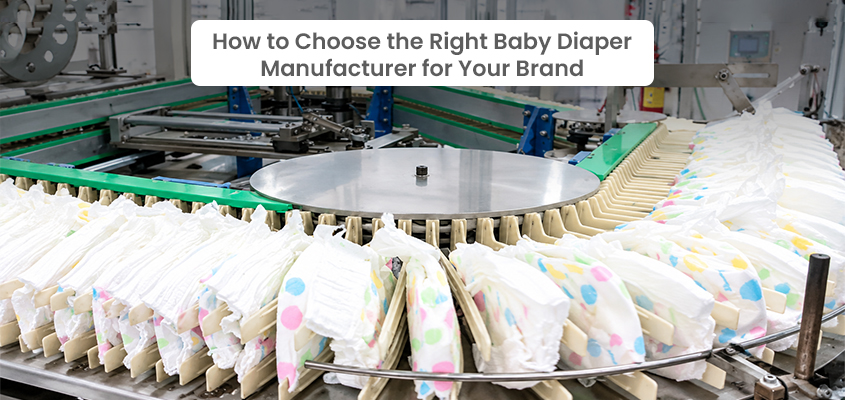
Everything above depends on who actually makes the diaper. Start with experience and production capability: has the factory made baby diaper pants before, and at what scale? Ask about OEM and private-label options, how materials are sourced and quality is controlled, and how far product specifications can be customised. Check what help you'll get with packaging and branding. And ask about capacity and consistency, because steady supply matters as much as a good first sample. A hygiene products manufacturer that already makes baby and adult diapers may bring wider experience with materials and processes, though you still need to check the details yourself.10. What Brands Should Finalise Before Starting Manufacturing
Before you move to production, get these decisions down on one page:- your target customer segment and market positioning
- the features and performance you expect from the diaper
- material and absorbent core specifications
- the size range and pack quantities
- expected production volume and budget
- sample approval before any bulk run
Conclusion
Softness, absorbency, leak protection, fit, sizing, and testing are what make baby diaper pants worth buying twice. Look hard at the product specifications before production starts, and get samples approved before any bulk order. Working with an experienced manufacturing partner makes most of this easier. If you're exploring baby diaper manufacturing and OEM solutions, Litewave Healthcare is worth a look. It's one of the baby diapers manufacturers in India offering OEM services that support customised products under a client's brand name. Share your requirements, ask for samples, and see whether it fits your brand.Frequently Asked Questions
What features should brands consider when manufacturing baby diaper pants? The main ones are soft skin-contact materials, a good absorbent core, leak protection at the legs and waist, a stretchable waistband, a sensible size range, breathability, and proper quality testing. Which materials are commonly used in baby diaper pants? Typically, a soft nonwoven top layer, an absorbent core made from fluff pulp and super absorbent polymer, a breathable backsheet, and elastic parts for the waist and legs. Ask your manufacturer for the exact specification. How does the absorbent core affect baby diaper performance? The core decides how fast liquid goes in, how much it holds and whether the surface stays dry. If it's weak, you get leaks and a soggy feel. A good one copes with both day and night use. Why is a stretchable waistband important in baby diaper pants? It keeps the diaper snug without squeezing the baby, and it stretches when the baby moves. It also makes the pants easier to pull on and off. A bad waistband leaves gaps, and gaps leak. Can brands customise baby diaper pants through OEM manufacturing? Yes. With OEM manufacturing, brands can usually adjust product specifications and packaging, within what the manufacturer offers. Ask early what can be changed and what the minimum order quantity is. What quality tests should be conducted before launching baby diaper pants? At least absorption and rewet, leakage, material quality, elasticity and waistband strength, and batch-to-batch consistency. Also confirm the standards that apply in your target market.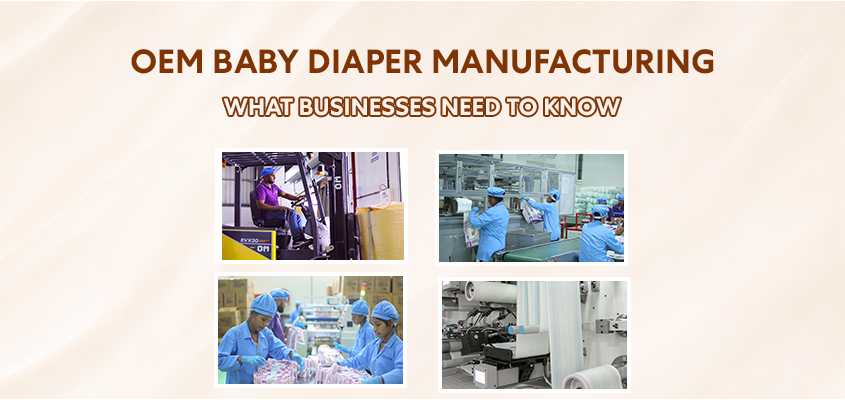


Our Clinet
 kiddle care
 eldry