Nov 28, 2026
OEM Baby Diaper Manufacturing: What Businesses Need to Know
How OEM Manufacturing Helps Businesses Build Their Own Baby Diaper Brand
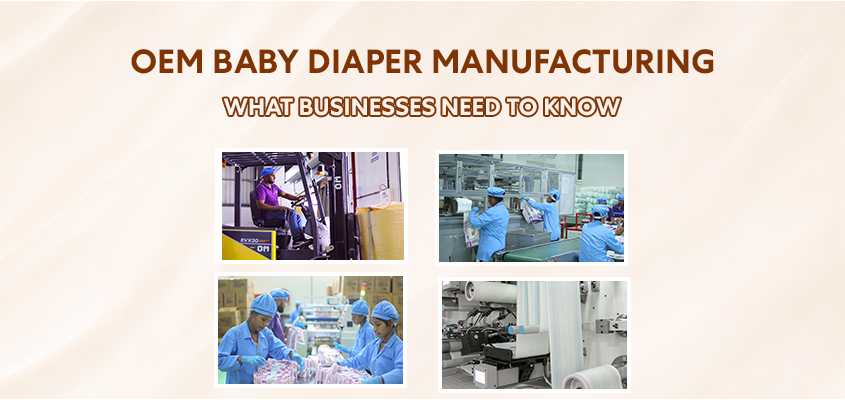
Plenty of families are moving to disposable diapers, and plenty of small businesses have noticed. Baby hygiene is a category where parents buy again and again for two or three years, and online shopping has made it easier for a new name to reach them. The catch is the factory. Diaper machines are expensive, they need trained people to run them, and nobody sets one up on a whim. That's where OEM baby diaper manufacturing comes in. Your side is the brand name and the idea behind it. An established manufacturer makes the diapers to your requirements, with your name on the pack. A good OEM partner helps with product development, production, quality checks and packaging, so your time goes into sales instead of machinery. It isn't as simple as sending over a logo and waiting, though. The better you understand the process, the fewer surprises you'll get. A little groundwork now saves a lot of trouble later.What Is OEM Baby Diaper Manufacturing?
OEM stands for Original Equipment Manufacturer. In the diaper business, it means a factory that makes diapers to a brand's own brief instead of selling only its own products. You decide what the diaper should be. They build it. Compare that with owning a plant. If you run your own facility, you buy the machines, hire and train the staff, source every raw material and keep the lines busy. If you outsource, the manufacturer already has all of that in place, and you pay for what you order. The finished diapers are sold under your brand name. Your customers never need to know whose machines were involved. The manufacturer's job is production and packaging. Yours is the brand, the market and the sales.How Does the OEM Baby Diaper Manufacturing Process Work?
The details change from one factory to another, but most projects follow the same six steps.- Requirement discussion. You explain who you're selling to, what type of diaper you want, and roughly what volumes and budget you have in mind. The manufacturer tells you what's realistic.
- Product specification. Materials, absorbency, sizes and features get fixed on paper. Samples and finished batches get checked against this later, so get it right.
- Sample development. You receive samples, test them, and ask for changes. Expect more than one round.
- Manufacturing. Once the samples are approved, production starts to those approved requirements.
- Quality checks. Performance, materials, and batch consistency are inspected before anything leaves the factory.
- Packaging and dispatch. Your branding goes on the packs, the cartons are filled, and the order ships.
Customisation Options Available in OEM Baby Diaper Manufacturing
One of the biggest reasons to go the OEM route is that the product can be shaped around your customer. What you can change depends on the manufacturer, but the usual list looks like this:- Diaper type. Baby diaper pants are the most requested, and other formats may be available.
- Absorbency level. Lighter for daytime, heavier for overnight, depending on who will use it.
- Top sheet and back sheet. The materials decide how soft the diaper feels and how well it breathes.
- Leak protection. Leak guards and leg cuff design.
- Waistband. How stretchy it is and how it fits.
- Sizes. Different sizes matched to baby weight groups.
- Packaging. Pack sizes, product information and branding.
Understanding Raw Materials Used in Baby Diaper Manufacturing
It helps to know what's inside a diaper, even if you never touch the machines. Whoever quotes you will talk in these terms, and you'll want to follow along.- Top sheet. The soft layer against the baby's skin.
- Absorbent core. Takes in liquid and holds it.
- Super absorbent polymer (SAP). The granules in the core that lock moisture away.
- Fluff pulp. Gives the core its structure and helps it absorb.
- Back sheet. The outer layer that stops leaks.
- Elastic materials. Used around the waist and the legs.
- Adhesives and small parts. They hold the layers together.
Quality Control in OEM Baby Diaper Production
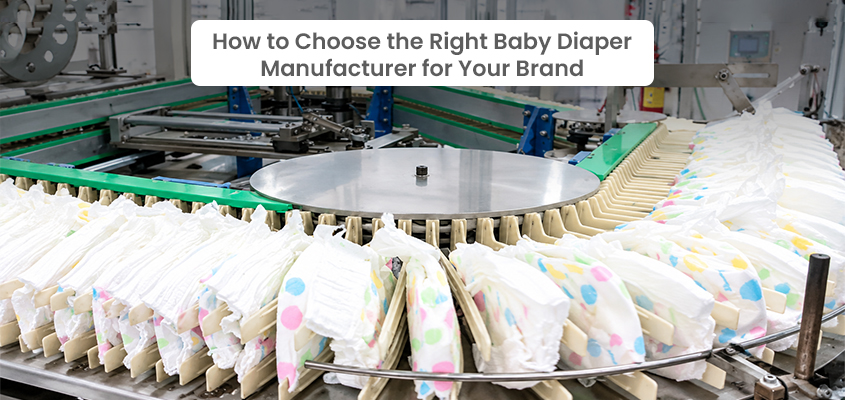
Don't leave quality checks for the end of the line, because by then it's too late to fix anything. A decent factory checks at several points, starting with the raw materials the day they arrive. After that the tests look at how the diaper behaves. How fast does it take in liquid, and how well does it hold it? How much comes back to the surface when you press on it? That's called rewet. Does it leak at the legs or the waist? The elastics get checked for stretch and fit, and someone measures the dimensions and looks at how the diaper is put together. Since it sits on a baby's skin, there's hygiene and microbiological testing as well. The last step is checking that batches match each other, plus a final look at the finished product. Ask how often each check is done and whether the records are kept. One good batch proves very little. Ten identical ones tell you the factory has its process under control.Packaging and Private Label Branding for Baby Diapers
This is where an OEM order starts to feel like your own product. The pack carries your brand name and logo, your colours and your design. Parents will judge you by it before they've even touched the diaper. Make sure the pack shows the size, the quantity and the two or three features you want to be known for. Think about where it will be sold, too. A pack for a retail shelf and a carton for distributors have different needs. And check the label information carefully, because requirements differ between markets and reprinting is costly.What Businesses Should Consider Before Starting OEM Production
Before you place an order, settle these questions:- who your target audience is, and whether there's real demand
- how you'll position and price the product
- the specifications you need
- the order quantities you expect, and the minimum order quantity (MOQ) the manufacturer asks for
- production capacity and delivery timelines
- packaging and branding requirements
- how you'll handle distribution and inventory
Benefits of Partnering with an OEM Baby Diaper Manufacturer
The main benefit is the obvious one. You don't have to build a factory. You use infrastructure that already exists, so you can launch sooner and with far less upfront investment. Beyond that, you can have the product developed around your needs, rather than picking from a fixed list. You can put your own brand on it through private label. You can scale up production as your sales grow. And because someone else is handling manufacturing, your own energy goes into marketing, sales and distribution, which is where a new brand usually needs it most.Why Choose Litewave Healthcare for OEM Baby Diaper Manufacturing?
Litewave Healthcare is a baby and adult diaper manufacturer based in Kosamba, Surat, and among the diaper making companies in India that work with businesses on OEM and private-label projects. Here's what its website says about what it offers:- dedicated baby diaper manufacturing
- product specifications customised to the brand's requirements
- manufacturing infrastructure for commercial and bulk orders
- in-house quality testing
- private-label packaging and branding support
Conclusion
OEM manufacturing gives a business a realistic way to launch its own baby diaper brand without building a factory. What makes it work is the groundwork: clear product specifications, well-chosen materials, proper quality testing and packaging that suits your market. Just as important is a partner who can support your production over the long term, not just the first order. If you're looking at baby diapers manufacturers in India for an OEM project, get in touch with Litewave Healthcare and talk through your requirements. Tell them what you want to make, ask for samples, and see whether it's the right fit.Frequently Asked Questions
What is OEM baby diaper manufacturing? It's an arrangement where a manufacturer produces baby diapers to a brand's requirements, and the brand sells them under its own name. The brand doesn't need its own factory. How does the OEM baby diaper manufacturing process work? It usually runs through requirement discussion, product specification, sample development, manufacturing, quality checks, and then packaging and dispatch. Can businesses customise baby diapers through OEM manufacturing? Yes, within what the manufacturer offers. Diaper type, absorbency, materials, leak protection, waistband, sizes and packaging can often be adjusted. What materials are used in OEM baby diaper production? A soft top sheet, an absorbent core made from fluff pulp and super absorbent polymer, a back sheet, elastic materials for the waist and legs, and adhesives that hold it together. What is the minimum order quantity for OEM baby diaper manufacturing? It differs from one manufacturer to another and depends on the product and the order. Always ask for the MOQ before you commit to a design. Litewave says its minimum depends on the requirement, with trial runs possible. How long does the baby diaper manufacturing process take? There's no single answer. Sample approval, production and dispatch each take time, and it depends on your specification and order size. Ask the manufacturer for a timeline in writing before you begin.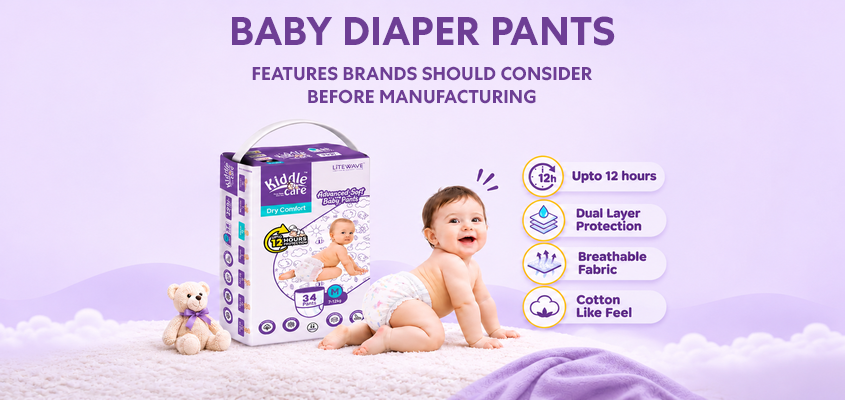


Our Clinet
 kiddle care
 eldry